 E-SHENA Portal
The National Occupational Safety and Health Policy
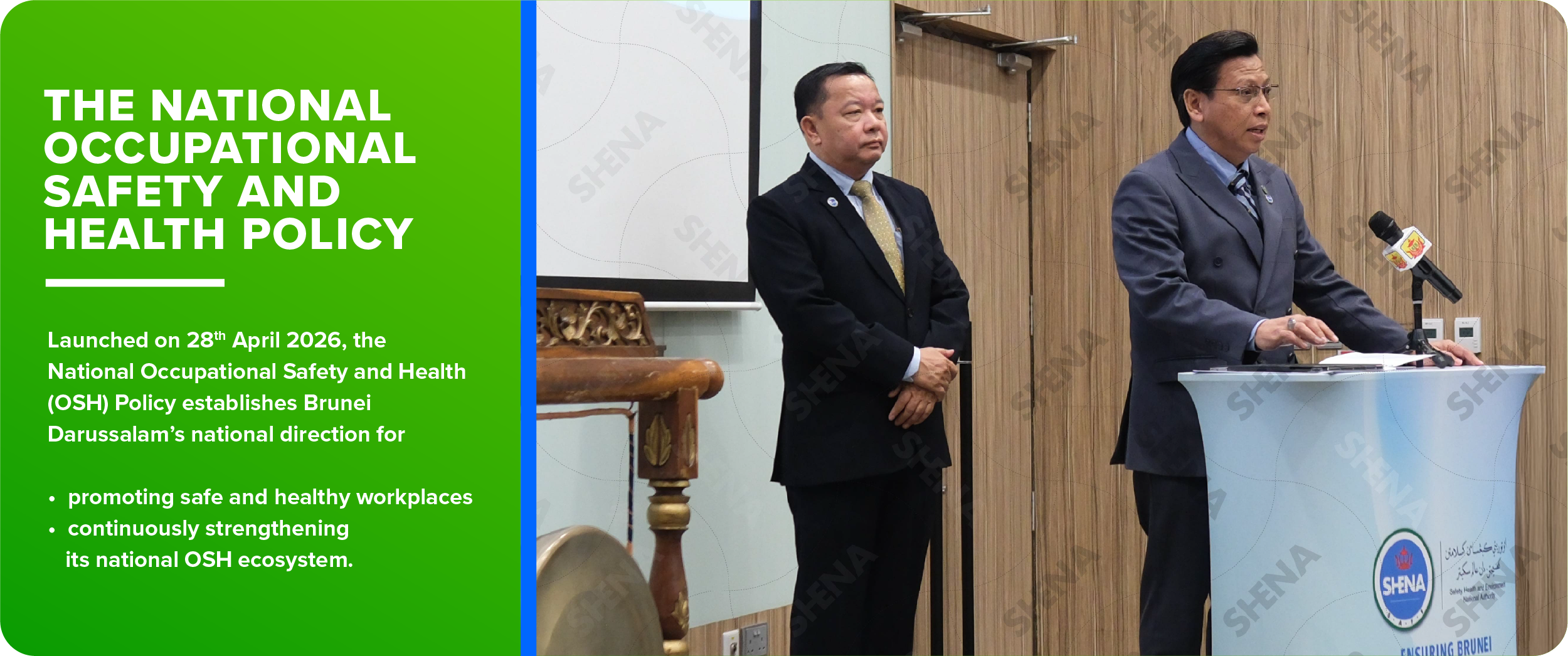
The Policy supports Brunei Darussalam’s implementation of the International Labour Organization’s Promotional Framework for Occupational Safety and Health Convention, 2006 (No. 187) (the Convention). The Convention promotes continuous improvement in OSH through a coordinated national policy, system and programme, developed in consultation with representatives of employers and workers.
At the national level, the Policy complements the Workplace Safety and Health Act (Cap. 277) and its subsidiary regulations, which establish the legal framework for protecting the safety and health of persons at the workplace. It provides a common direction for the Government, employers and workers to strengthen OSH standards, prevent work-related fatalities, injuries and diseases, and foster a positive safety and health culture.
The Policy also reinforces Brunei Darussalam’s broader commitment to sustainable socioeconomic development under Wawasan Brunei 2035. Safe and healthy workplaces contribute to the protection and well-being of workers, strengthen organisational resilience and productivity, and contribute to the nation’s long-term prosperity.
Download the National OSH Policy
 The National Occupational Safety and Health Policy
Frequently Asked Questions (FAQs)
The National Occupational Safety and Health Policy sets out Brunei Darussalam’s overall direction and commitment towards promoting safe and healthy workplaces and developing a robust national OSH ecosystem.
It provides a common framework for continuous improvement through effective legislation and enforcement, national programmes, education and training, emergency preparedness, stakeholder collaboration, technological advancement, and the adoption of relevant international good practices.
The Policy provides national direction for all workplaces and relevant stakeholders, including the Government, employers and workers, consistent with the Workplace Safety and Health Act (Cap. 277) and its subsidiary regulations.
Achieving the objectives of the Policy requires collective ownership and meaningful participation from all parties involved.
The Workplace Safety and Health Act (Cap. 277) and its subsidiary regulations establish the legal duties and requirements that must be complied with at all workplaces.
The Policy complements this legal framework by setting the broader national direction for continuously improving OSH standards, systems and culture.. The Policy does not replace, reduce or otherwise affect any legal duty or obligation imposed under the Act or any other applicable written law.
Employers are expected to translate the principles of the Policy into practical and sustained workplace action. This includes, but is not limited to:
- complying with applicable OSH legislation and standards;
- identifying hazards and effectively managing workplace risks;
- taking appropriate measures to prevent work-related fatalities, injuries and diseases;
- providing workers with appropriate information, instruction, training and supervision;
- ensuring that machinery, equipment and hazardous substances are used safely;
- maintaining effective emergency preparedness and response arrangements;
- consulting and engaging workers on matters affecting their safety and health;
- promoting a positive workplace safety and health culture; and
- continuously reviewing and improving organisational OSH performance.
Employers are also encouraged to collaborate with the Government, workers and other stakeholders in developing innovative and practical solutions to emerging OSH challenges.
Workers play an essential role by complying with workplace safety and health procedures, using suitable equipment and protective measures correctly, reporting hazards and incidents, participating in training and consultation, and contributing to the continuous improvement of workplace safety and health practices.
Effective implementation depends on open communication and cooperation between employers and workers.
Organisations are encouraged use the Policy as a basis or reference when developing or reviewing their own organisational OSH policies.
However, each organisation should ensure that its respective policies are tailored in accordance to its nature of work, workplace hazards and risks, organisational structure, workforce, and applicable legal requirements. An organisational OSH policy should also clearly set out the organisation’s own commitments, responsibilities, implementation arrangements and review process.
Using the Policy as a foundation can help organisations align their internal OSH practices with Brunei Darussalam’s broader national objectives.
The Policy will guide the development and implementation of a coordinated, actionable and measurable national OSH plan that involves tripartite collaboration among the Government, employers and workers to:
- establish clear strategies, priorities, shared responsibilities and relevant performance indicators;
- strengthen coordination and collaboration across relevant stakeholders;
- build institutional and workplace OSH capabilities;
- monitor and evaluate national OSH performance; and
- periodically review the Policy, national OSH plan and related performance to ensure their continued relevance and effectiveness.
Through this collaborative approach, the commitments and objectives of the National OSH Policy can be translated into measurable, sustainable and continuously improving OSH outcomes for Brunei Darussalam.